

Hey there! Some of the links on this page are affiliate links which means that, if you choose to make a purchase, I may earn a small commission at no extra cost to you. I greatly appreciate your support!

So I guess it is clear that blogging makes money, but now the question is, just how much?

This page contains affiliate links, please CLICK HERE for more info.
Starting a blog in today’s age is quite a cakewalk, all you have to do is follow this guide step-by-step and you’ll have your very own blog within the next 10 minutes.
1: Choose a Blog Topic and a Blog Name
The first and foremost thing you need to do is to come up with a comfortable topic to write about and a blog name (SomethingSomething.com).
For example, this blog revolves around the topic of “Entrepreneurship”, and “Personal Development” related stuff.
These are the niches of each website. You have to choose one or more niches for your blog.
- If you’re passionate about health, go for a health blog
- If you’re interested in photography, start a photography blog
- If you’re interested in cooking and recipes, start a cooking blog
- If you’re leaned towards building a blog around your own life, do that
As long as you’re able to create content consistently on that topic, you can start a blog. That’s the thing about blogging, you can share anything you like and that’ll make you money.
2: Choose a blogging platform
At this stage, you’ll need to look at the currently available blogging platforms and determine the type of blog management software that you are going to use.
As you can see from the graph, WordPress software is by far the most popular technology for blogging, with over 90% market share in the U.S.
I recommend building your blog using the self-hosted WordPress blog.
That way, you will be in total control of your blog and its contents. It will cost just a few dollars per month for the webspace (hosting account), and around ten dollars per year for a domain. The actual blogging software is free and open-source.
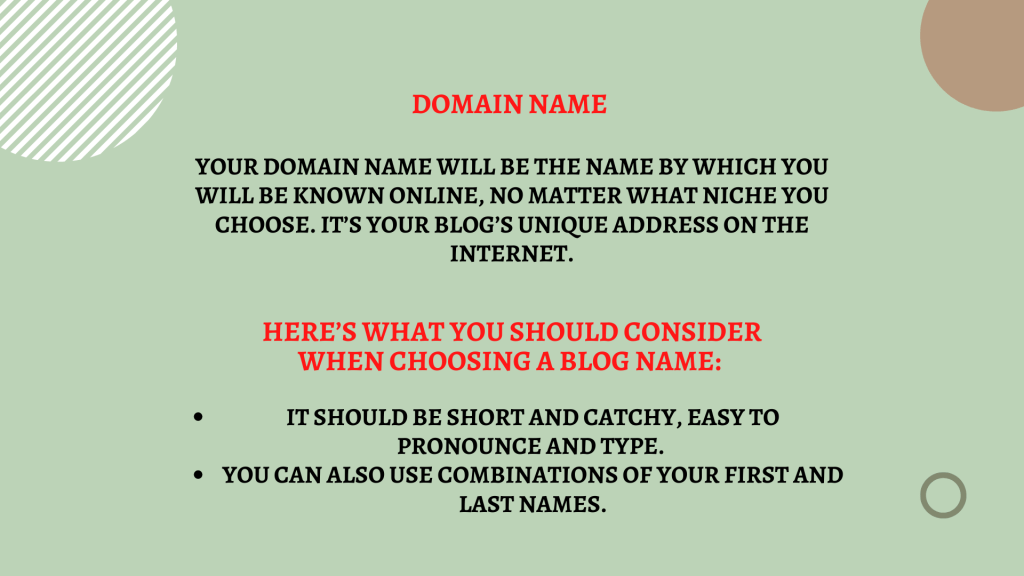
3: Choose a domain name and get blog hosting
Web hosting
After choosing a domain name, selecting a reliable hosting service will be one of the most important decisions you make.
To a great extent, the functionality and performance of your blog will depend on your hosting provider. The host makes sure that your blog is available 24/7 to potential readers and it’s where your content is stored online.
4: Choose a Blog Theme
After the above step, the next thing you need to do is to apply a theme to your blog. There are The look and feel of your new blog rely on the theme you choose. Your first-time readers will notice the overall appearance of it before they even take a look at the content. Select a theme that looks great, but also works for your specific needs.
Here’s a quick guide for choosing your theme :
- Read the description – Most themes come with a short description of features and functionality. Reading it can help you to figure out if the theme matches your needs.
- Preview the theme – Preview the theme (demo) to get an idea of the overall look, layout, and how customizable it is.
- Check the ratings – Star ratings will be visible in the preview and under theme details to give you a clear idea of how good the theme is.
If you can’t find a theme that you absolutely love, don’t worry. Settle on one that you like, and you can always change it in the future.
5: Write and publish blog content
So far, you’ve established a domain name, chosen your blog hosting site, set up a blog theme, and you are ready to go. Your framework is complete.
Before you begin publishing posts (day-to-day writing) on your blog make sure you fill in all the important static pages with content (such as About us, Contact, etc.). Let’s explore those types of pages.
Prepare and publish content on main pages
Depending on your individual needs you can decide what pages to publish. The following are the most common pages bloggers use:
- Homepage – This depends on what type of layout you choose. As I described above, when customizing your blog you can choose to display the homepage as a static page. In that case, you will have to prepare content for it.
- About us – The most traditional page on any blog is the “About us” page. This page tells new visitors what it is all about, who you are and why you run a blog about your niche topic.
- Contact – This page allows visitors to your blog to communicate with you. It can be a straightforward page with your email address plus your social network links, or you can use a simple contact form that visitors can use to communicate with you.
- Products, Services, Resources – Static landing pages with any additional information that you want to include on your blog.
6: Optimize your blog for search engines
Search engine optimization (SEO) is the process that website owners use to get more traffic to their web pages from search engines (such as Google).
SEO involves many different tactics and techniques. As a blogger, you will have to get familiar with these. I won’t be talking about any advanced processes here. As a bare minimum, you will have to do the following for every blog post or page you publish on your blog: perform keyword optimization and add SEO meta tags on all pages.
Ideally, keyword optimization should be performed for any blog post or page. It’s important to select the main keywords (and related words) that you want to target for each page and make sure that you include these (and related words) within the content. This way it will be easier for search engines to understand what a specific web page is about when they crawl it and you have a better chance to rank higher in search results.
7: Promote, market, and grow your blog
Let everyone know about your blog
Get started by informing your friends, family, and colleagues about your new endeavor. Basically, you should let anyone know who might be interested in reading your content.
You should also do the following:
- Include your blog name (URL) in your email signature.
- Include it in your social media accounts or any online communities you are involved in.
- Use every opportunity to get the word out about your new undertaking.
Be active within your niche
Get active on relevant blogs, forums, groups, and social pages.
Blogger communities are a good way to connect with other bloggers in your niche. You can engage, build friendships, and help each other in spreading content.
8: Make money blogging (optional)
You should keep in mind that blogging isn’t just about making money. It is about creating useful content and writing blog posts that will attract readers and make them come back for more.
Here are types of content that you should consider writing and adding to your blog:
- Listicles or top list
- How-to guides
- Tutorials and manuals
- Product reviews
- Product comparisons
The next step is to learn how to write content for your blog.
9: Write and publish blog content

So far, you’ve established a domain name, chosen your blog hosting site, set up a blog theme, and you are ready to go. Your framework is complete.
Now comes the moment of truth and you can actually start blogging. You need to learn how to write your first blog post. On the web, any useful information or experience that you share with readers is called “content.” It must be something valuable that people will want to interact with and come back for more.
Before you begin publishing posts (day-to-day writing) on your blog make sure you fill in all the important static pages with content (such as About us, Contact, etc.). Let’s explore those types of pages.
Prepare and publish content on main pages
Depending on your individual needs you can decide what pages to publish. The following are the most common pages bloggers use:
- Homepage – This depends on what type of layout you choose. As I described above, when customizing your blog you can choose to display the homepage as a static page. In that case, you will have to prepare content for it.
- About us – The most traditional page on any blog is the “About us” page. This page tells new visitors what it is all about, who you are and why you run a blog about your niche topic.
- Contact – This page allows visitors to your blog to communicate with you. It can be a straightforward page with your email address plus your social network links, or you can use a simple contact form that visitors can use to communicate with you.
- Products, Services, Resources – Static landing pages with any additional information that you want to include on your blog.
10: Optimize your blog for search engines
Search engine optimization (SEO) is the process that website owners use to get more traffic to their web pages from search engines (such as Google).
SEO involves many different tactics and techniques. As a blogger, you will have to get familiar with these. I won’t be talking about any advanced processes here. As a bare minimum, you will have to do the following for every blog post or page you publish on your blog: perform keyword optimization and add SEO meta tags on all pages.
Keyword optimization
This is the process of researching and selecting the right set of keywords that you think people will type in a search to find information like yours online.
Ideally, keyword optimization should be performed for any blog post or page. It’s important to select the main keywords (and related words) that you want to target for each page and make sure that you include these (and related words) within the content. This way it will be easier for search engines to understand what a specific web page is about when they crawl it and you have a better chance to rank higher in search results.
11: Promote, market, and grow your blog
By now, you’ve learned how to start a blog, how to create blog content, and how to get it discovered by search engines.
It is important to understand that you can write the most compelling copy in the world and design a blog interface that would sell people their own shoes. However, if no one sees it, all of your hard work is in vain. So, you need to know how to promote your blog.
Before you start promoting your blog, check if it’s ready:
- Make sure that your content is live and ready for promotion.
- Test your blog on different devices (desktop, tablet, mobile) and browsers (Chrome, Firefox, Safari, and Microsoft Edge) to check that pages open correctly.
- Check your contact info and test your contact form to see if it works well.
- Test your social sharing buttons so that people can easily share your content.
- Ensure that you interlink your content so that people can easily find other important information on your blog.
- Give your visitors one or more ways to connect with you and subscribe to your email list.
- Set up Google Analytics to track your blog’s performance and visitors.
Let’s look closely at the basic promotion and marketing activities that you can apply to grow your audience once you build a blog.
Let everyone know about your blog
Get started by informing your friends, family, and colleagues about your new endeavor. Basically, you should let anyone know who might be interested in reading your content.
You should also do the following:
- Include your blog name (URL) in your email signature.
- Include it in your social media accounts or any online communities you are involved in.
- Use every opportunity to get the word out about your new undertaking.
Be active within your niche
Get active on relevant blogs, forums, groups, and social pages.
Blogger communities are a good way to connect with other bloggers in your niche. You can engage, build friendships, and help each other in spreading content.
Here are some popular activities you can do:
- Blog commenting. Start posting comments on other relevant blogs. It’s a great way to build relationships with top bloggers within your niche.
- Social media marketing. You should make use of the social media avenues that best fit your own niche and style. Choose the one (or ones) that best fit your needs and start promoting your content to grow your audience. Some of the most popular social media networks that bloggers use on a daily basis are Facebook, Instagram, and Pinterest.
- Guest blogging. Take the relationship a step further and offer to write guest blog posts for another website. Just be sure that you guest post on reputable sites and that the content is directly related to your niche. Guest posting is an excellent way to build an online presence.
12: Make money blogging (optional)
Monetization is the process of translating your blog activity into earnings.
You should keep in mind that blogging isn’t just about making money. It is about creating useful content and writing blog posts that will attract readers and make them come back for more.
When starting a blog think about adding content that will generate future income. Based on my own blogging experience, as well as from working with other bloggers, I’ve learned that specific kinds of content are more effective for generating money.
Here are types of content that you should consider writing and adding to your blog:
- Listicles or top list
- How-to guides
- Tutorials and manuals
- Product reviews
- Product comparisons
Now, let me show you some different ways how bloggers make money.
Running ads on your blog
There are seamless possibilities for you to run ads on your blog. Regardless of your niche, you can opt for ads that are specific to what you are writing about or ads that simply better serve your advertiser’s purposes.
Google Adsense, Mediavine, and Adthrive are some of the most popular choices for blog ads.
Enrolling in affiliate programs
Affiliate programs are ways of teaming up with retailers to promote their products and benefit from successfully carrying out sales through a commission.
Some things that you need to consider when enrolling in affiliate programs:
- The number of affiliate sales will strongly rely on the number of visitors you have.
- You need to be credible enough for your visitors to click on your links.
- You may want to consider placing a notice on your Terms of Use page that you do use affiliate links.
There are a few popular online platforms that offer affiliate programs if you want to get started, such as Amazon Associates, ShareASale, and ClickBank.
Selling your products and services
If you are creative and entrepreneurial, you could consider using your blog as a venue for selling your own products and services. This is an option especially as your blog grows in readership, authority, and popularity.
There are WordPress plugins, such as the WooCommerce plugin, that you can easily integrate into a blog and start using to sell products online.
Selling sponsored posts
Advertisers are always looking for exposure and are willing to pay you for placing a sponsored post on your blog.
Those posts usually promote advertiser products or services and are a good way to make money from your blog. In the future, if you’re able to build a popular blog and become an authority in your niche, the advertisers could approach you to publish their posts.
Consider the possibilities, and then choose the method or methods that best suit you and your audience.
Conclusion
Congratulations! You’ve learned how to start a blog. You have your own domain name, and hosting space and your blog is set up. Next, start content creation, and promotion to become a successful blogger.
Need help to optimize and manage your Pinterest Business Profile and grow your brand on Pinterest. Check out our Pinterest Manager Services Today.


 Empowered Woman | Entrepreneurs